Optimizing Acoustic Ratings in Drywall Frameworks
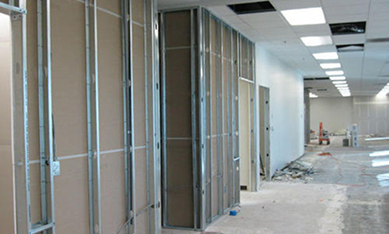
When engineering modern commercial partitions, managing Sound Transmission Class (STC) ratings hinges directly on the configuration of the internal steel framework. Standard practice often defaults to adding multiple layers of gypsum board, but optimizing the steel stud layout yields superior performance at a lower material cost. Utilizing thinner-gauge steel studs (such as 0.50mm) allows the metal to remain flexible enough to absorb acoustic energy rather than transmitting it. Additionally, increasing the air cavity width between studs from 48mm to 70mm, and introducing staggered stud layouts on shared tracks, breaks the structural path of sound waves completely. This structural separation, paired with precise insulation placement, significantly increases structural dampening without over-loading wall profiles.
Technical Quality Verified
The specifications detailed in this publication adhere directly to hot-dip galvanized metallurgical performance frameworks monitored by Bati Profils lab units.